
News, Pelvic Health, Physiotherapy, Sports Massage
Exercise During Pregnancy in Singapore
Oct
Updated 12/11/2026
For most women with an uncomplicated pregnancy, exercise during pregnancy is safe and beneficial. Singapore’s physical activity guidelines recommend aiming for at least 150 minutes of moderate aerobic activity a week, along with suitable muscle-strengthening exercises. If you have a medical condition, pregnancy complications or restrictions from your obstetrician, ask your maternity team which activities are suitable for you. Singapore Physical Activity Guidelines for Pregnant and Postpartum Women. ch-api.healthhub.sg
You might feel ready for a swim on Saturday, then find the walk to the MRT tiring on Monday. That change can leave you wondering whether to keep your usual routine, slow down or try something different. Start with what feels manageable today. A shorter walk, a cooler route or a different class may make it easier to stay active as your pregnancy progresses.
What are the benefits of exercise during pregnancy?
Regular activity helps you maintain fitness as your body changes. It may also improve sleep and mood and reduce the risk of gestational diabetes, a type of high blood sugar that develops during pregnancy. NHS guide to exercise in pregnancy. NHS
Think about what makes an activity easy to repeat. If getting to a class takes an hour each way, a walk with a friend after dinner might fit your week better. If you enjoy swimming, a pool near home gives you another option on days when walking feels less comfortable.
How much exercise during pregnancy should you aim for?
For women without medical restrictions, the weekly target is at least 150 minutes of moderate aerobic activity. You can spread it across several days and break it into shorter sessions. If you’ve been inactive, build up gradually from a duration you can manage comfortably. Singapore Physical Activity Guidelines. ch-api.healthhub.sg
Use the talk test to gauge your effort. At a moderate pace, you’ll breathe faster and still be able to talk. If it becomes difficult to get a sentence out, slow down. For a walk, start on a familiar route where it’s easy to turn back, then see how you feel before adding distance. HealthHub’s guide to exercise during pregnancy. healthhub.sg
Which types of exercise during pregnancy are usually suitable?
Walking, swimming, stationary cycling, pregnancy-adapted yoga or Pilates, and suitable strength exercises are common options for uncomplicated pregnancies. Your starting point depends on what you’re used to doing and how you feel now. Perinatal Society of Singapore exercise guidelines. perinatal.sg
Walking
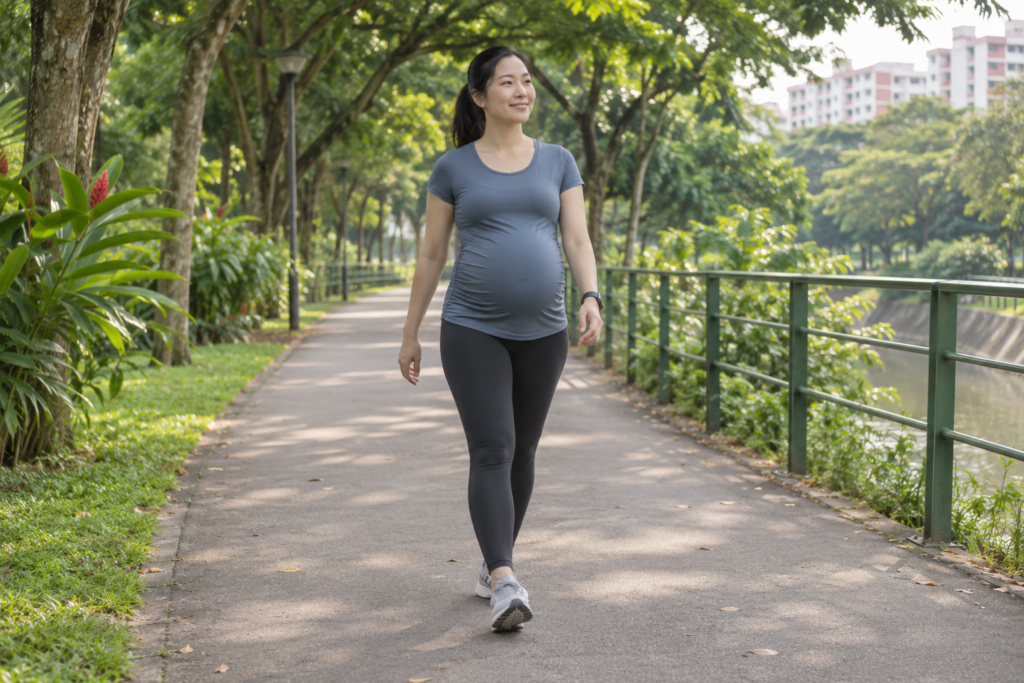
Try a short, level route with somewhere to sit if you need a break. A familiar park connector or a sheltered route near home makes it easy to change your plans. Start at an easy pace and pick it up if you feel comfortable. HealthHub’s walking tips for pregnancy. healthhub.sg
Swimming and water exercise
The water supports your weight, which can make movement feel more comfortable when your joints are tired. A swim or a pregnancy-adapted water exercise class may suit you. Take your time getting in and out, especially when the poolside is wet. HealthHub’s swimming guidance. healthhub.sg
Stationary cycling
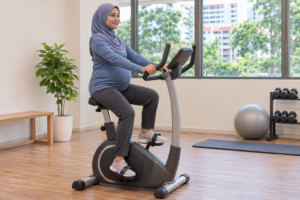
An indoor bike lets you adjust the pace and resistance without having to balance in traffic. As your bump grows, check that you can reach the handlebars and pedal comfortably. A stationary bike with back support may suit some women. HealthHub’s guide to suitable pregnancy activities. healthhub.sg
Modified yoga or Pilates
Choose a pregnancy-adapted class and tell the instructor how many weeks pregnant you are. Ask how they can adapt movements that feel awkward or uncomfortable. Avoid hot yoga and hot Pilates during pregnancy. Perinatal Society of Singapore exercise guidelines. perinatal.sg
Strength exercises
Depending on your experience and comfort, strength work can include bodyweight exercises, resistance bands or light weights. Breathe steadily through each movement. If you’re unsure about your technique or how much weight to use, ask for guidance. Perinatal Society of Singapore exercise guidelines. perinatal.sg
How should exercise during pregnancy change by trimester?
First trimester
Nausea and fatigue can make your usual routine harder to follow. A short walk when you feel better may be more manageable than a longer session at a fixed time. If vomiting makes it difficult to keep fluids down, seek medical advice before resuming exercise. HealthHub’s trimester guidance. healthhub.sg
Second trimester
If your energy improves, you may feel ready to do more. Build up at a pace that suits you. From around 16 weeks, HealthHub advises avoiding exercise that keeps you lying flat on your back. In a class, ask for a seated, side-lying or supported version of the movement. HealthHub’s exercise safety guidance. healthhub.sg
Third trimester
Many women with uncomplicated pregnancies can continue being active into the third trimester. As your bump grows, shorter sessions or lower-impact activities may feel more comfortable. If your usual run starts to feel awkward, try walking or swimming and discuss new symptoms or changes to your routine with your maternity team. NHS guidance on exercise in later pregnancy. NHS
How can you exercise comfortably in Singapore’s heat?
Choose a cooler time of day or an indoor space. Bring water, wear light clothing and ease into the session. If your usual walk has long stretches without shade, a shorter loop near home gives you more chances to pause or head indoors. HealthHub’s tips on keeping cool during exercise. healthhub.sg
Avoid contact sports, activities with a high risk of falling, scuba diving and workouts in excessive heat. If you trained vigorously before pregnancy and want to continue, discuss the activity and intensity with your obstetrician. Perinatal Society of Singapore exercise guidelines. perinatal.sg
When should you stop exercising and seek medical help?
Stop exercising and seek immediate medical attention if you notice any of these warning signs. perinatal.sg
- Vaginal bleeding or fluid leaking from the vagina
- Regular, painful contractions or severe or persistent abdominal pain
- Chest pain, fainting or breathlessness that starts before exercise or continues at rest
- A severe headache, changes in vision, or calf pain or swelling
- Your baby moving less than usual once you’re familiar with their usual pattern
If you’re unsure whether leaking fluid is urine or your waters, contact your maternity team immediately. If you know it’s urine and it repeatedly happens when you cough, walk or exercise, bring it up with your clinician. The timing and the activities that trigger it can help guide your assessment. KK Women’s and Children’s Hospital guidance on when to seek help. KK Women’s and Children’s Hospital
How can pelvic health physiotherapy help?
Pelvic girdle pain can affect the front or back of the pelvis. You might notice it while walking, climbing stairs, getting out of a car or turning over in bed. If pain is changing how you move, tell your maternity team. A physiotherapist can assess which movements bring it on and help you find more comfortable ways to stay active. Royal College of Obstetricians and Gynaecologists guide to pelvic girdle pain. RCOG
At BMJ, an assessment starts with what matters to you. You may want to walk comfortably to work, continue a familiar class or get help with bladder leakage. Depending on your symptoms, the physiotherapist may discuss ways to adapt your activity, work on breathing and movement, or guide you through pelvic floor exercises. BMJ Pelvic Health Physiotherapy. BMJ Physiotherapy
If you’re also thinking about recovery after childbirth, see what physiotherapy can help with at each stage. BMJ’s guide to pre-natal and post-natal physiotherapy. BMJ Physiotherapy
Frequently asked questions
Can I start exercising if I was inactive before pregnancy?
Yes, many women with uncomplicated pregnancies can start gently. Discuss it at your antenatal appointment, especially if you have a medical condition or are unsure where to begin. A short, easy walk is one way to start. Add time gradually as you feel able. HealthHub’s advice on getting started. healthhub.sg
Can exercise during pregnancy cause a miscarriage?
In an uncomplicated pregnancy, appropriate physical activity has not been associated with an increased risk of miscarriage. If you’re experiencing bleeding or pain, or have a pregnancy complication, contact your maternity team for advice. Perinatal Society of Singapore exercise guidelines. perinatal.sg
Can I keep running if I ran before getting pregnant?
Some experienced runners can continue with adjustments. Discuss your usual distance and intensity with your maternity team, particularly if you want to keep doing vigorous sessions. If you’re new to exercise, begin with a gentler activity such as walking. NHS guidance on starting and adapting exercise. perinatal.sg
Can I do pelvic floor exercises while pregnant?
Yes. Pelvic floor muscle training is recommended during pregnancy. Learning to relax the muscles after a squeeze is part of the exercise. If you have pain, bladder leakage or difficulty feeling the movement, a pelvic health physiotherapist can help tailor the exercises to you. NICE guidance on pelvic floor muscle training. NICE
Can I continue exercising close to my due date?
Many women with uncomplicated pregnancies can stay active close to their due date. Choose activities you can do comfortably and follow any restrictions from your maternity team. If a warning sign develops, stop and seek medical attention. NHS guidance on exercise in later pregnancy. NHS
Discuss your exercise questions with BMJ
If pelvic discomfort, back pain or bladder leakage is getting in the way of an activity you enjoy, tell us what you’d like to get back to. It helps to mention how many weeks pregnant you are, when the symptoms started and any exercise advice you’ve received from your obstetrician.
To ask about a pelvic health appointment, WhatsApp BMJ Physiotherapy on +65 8342 6731.
