
Back Pain, News, Pelvic Health, Physiotherapy
Pre-Natal and Post-Natal Physiotherapy in Singapore: Supporting Pregnancy and Recovery

Dec
Updated 10 November 2026
Pregnancy advice often focuses on the baby. After delivery, conversations turn to feeding, sleeping and the next developmental milestone. Somewhere between all those appointments, a mother’s own physical recovery can receive less attention.
Perhaps turning in bed has become painful during pregnancy. You might notice urine leakage when you sneeze after childbirth, or feel unsure about returning to exercise. Even carrying your baby or standing through a shower may feel different.
These concerns deserve attention. Pre-natal and post-natal physiotherapy can help women manage pregnancy-related discomfort, address pelvic floor concerns and support physical recovery after childbirth.
At BMJ Physiotherapy Singapore, care is tailored to your individual needs, whether you are preparing for motherhood or navigating life after delivery. The aim is to help you move more comfortably, manage symptoms and rebuild confidence in everyday activities.
What Is Pre-Natal and Post-Natal Physiotherapy?
Pre-natal physiotherapy addresses movement, pain and physical function during pregnancy. An assessment can help identify what makes particular activities uncomfortable and guide suitable changes to exercise and daily routines.
Post-natal physiotherapy, also called postpartum physiotherapy, focuses on physical recovery after childbirth. Your priorities may include bladder control, abdominal function, pelvic comfort or returning to activities you enjoy.
At BMJ, pregnancy and postnatal care form part of its pelvic health physiotherapy service, which also addresses pelvic floor, bladder and bowel concerns. BMJ Physiotherapy
Your starting point matters. A woman experiencing pelvic pain during pregnancy needs a different plan from someone preparing to resume running several months after delivery.
How Can Physiotherapy Help During Pregnancy?
Back and pelvic girdle pain
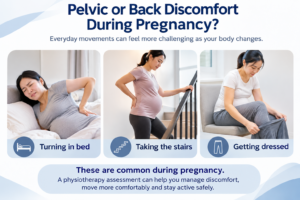
Pain during pregnancy can make ordinary tasks unexpectedly difficult. Walking to the MRT, climbing stairs or turning over at night may become uncomfortable.
Pregnancy-related pelvic girdle pain can affect the front or back of the pelvis. Some women particularly notice it when standing on one leg, getting dressed or getting out of a car.
Physiotherapy may involve tailored exercises, changes to movement and advice on managing activities that aggravate symptoms. A support belt may be appropriate for some women following assessment. If pain affects your mobility, discuss it with your obstetric care team rather than assuming you must tolerate it until delivery. nhs.uk
Making daily movement more manageable
Your physiotherapy appointment is an opportunity to discuss specific difficulties.
For example, does discomfort build during your commute? Is getting out of bed harder than walking? Does your usual workout leave you sore afterwards?
These details help shape useful advice. The aim is to find practical options that fit your day, rather than give you another lengthy list of things to remember.
Understanding your pelvic floor
Pelvic floor preparation involves more than learning to squeeze.
Effective muscle function includes contraction, relaxation and coordination. NICE guidance recommends that supervised pelvic floor training assesses these abilities and adapts the programme to the woman’s needs and any discomfort.
This is why repeating more exercises is not always the most useful next step when you are unsure whether you are doing them correctly. england.nhs.uk
Planning activity around your pregnancy
Bring your questions about exercise to your appointment, including what you currently do and what you hope to continue.
Your physiotherapist should also know about pregnancy complications, medical restrictions or advice from your obstetrician. Physiotherapy supports your maternity care; decisions about medical pregnancy risks remain with your maternity team.
Common Physical Concerns After Childbirth
Recovery is personal. Two women who delivered in the same week may have very different symptoms, responsibilities and levels of support.
The following concerns are useful reasons to seek advice.
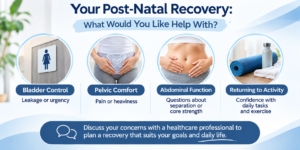
Urine leakage
You may notice leakage when coughing, sneezing, laughing or exercising. Some women instead experience urgency and struggle to reach the toilet in time.
An assessment helps clarify the pattern of symptoms and what rehabilitation may be appropriate. For stress or mixed urinary incontinence, NICE recommends a supervised pelvic floor muscle training programme lasting at least three months. Progress therefore needs to be considered over time, rather than judged after a few days of exercises. england.nhs.uk
Abdominal separation, or diastasis recti
During pregnancy, the two sides of the rectus abdominis muscles move apart as the abdomen expands. This is known as diastasis recti.
If separation remains noticeable after birth, or you have discomfort or concerns about abdominal function, seek advice. A physiotherapist can assess you and recommend appropriate exercises. Avoid using the appearance of another mother’s abdomen as your recovery benchmark. NHS
Your own goals are more useful: what would you like to feel more comfortable or confident doing?
Pelvic heaviness or a bulging sensation
A dragging feeling, vaginal heaviness or a bulging sensation is worth discussing with a healthcare professional. These symptoms may be associated with pelvic organ prolapse, but an assessment is needed to establish the cause.
Mention when you notice it, how it changes through the day and whether particular activities make it more apparent. These observations can help guide the discussion. england.nhs.uk
Back and neck discomfort
Looking after a baby introduces a new set of physical tasks: feeding, lifting, changing, carrying and bending over a cot.
Post-pregnancy discomfort can be related to these activities as well as pregnancy and birth. If a physical problem bothers you, ask for help rather than waiting for a routine check. NHS
At your appointment, describe your usual set-up. Where do you feed your baby? How long do you carry them? Which task leaves you most uncomfortable? Practical details make the advice more relevant.
Recovery after a caesarean birth
Recovery after a caesarean needs to account for surgery as well as pregnancy. Follow your maternity team’s wound-care and activity instructions, and seek advice before beginning strenuous exercise.
Physiotherapy can be discussed as part of your recovery plan, particularly if you are concerned about movement or returning to activity. NHS
What Does Post-Natal Physiotherapy Involve?
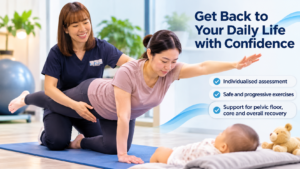
The assessment should lead to a plan that addresses your symptoms and priorities.
BMJ’s published treatment options include pelvic floor training, relaxation, bladder and bowel retraining, breathing and core coordination, manual therapy, Clinical Pilates and return-to-exercise programmes. The combination depends on the assessment findings. BMJ Physiotherapy
It helps to arrive with a clear sense of what matters most to you. Perhaps you want to walk without worrying about leakage, manage the school run with your older child or feel ready to attend an exercise class again.
You can also explain what is realistic at home. A programme needs to fit around caring responsibilities and the time you actually have.
Ask questions before leaving:
- What should I focus on first?
- How should these exercises feel?
- What symptoms mean I should stop and contact you?
- How will we decide when to progress?
Understanding the purpose of your programme makes it easier to follow and review.
When Should You Start Post-Natal Physiotherapy?
The right timing depends on your birth, symptoms and medical recovery.
After a straightforward birth, gentle activity such as walking may begin when you feel ready. A complicated delivery or caesarean generally requires more recovery time and individual advice before strenuous activity. NHS
A postnatal review around six to eight weeks is a useful opportunity to discuss physical concerns. However, if something is troubling you earlier, contact your healthcare team rather than waiting for that appointment. NHS
You can contact BMJ to ask when an assessment would be appropriate for your circumstances. Explain how recently you gave birth, the type of delivery and any complications or medical instructions.
If your baby is already several months old, you can still raise concerns. Your appointment should begin with where you are now and what you need help with.
Returning to Exercise After Pregnancy
Returning to exercise is a common goal, but it helps to define what “exercise” means to you.
A neighbourhood walk, a strength session and a run place different demands on the body. Your previous fitness is useful background, while your current recovery and symptoms also need consideration.
The six-week check is an opportunity to discuss exercise; it should not be treated as an automatic return date for every activity. NHS guidance advises seeking advice before high-impact exercise such as running or aerobics. NHS
For running specifically, NHS physiotherapy guidance advises against returning before 12 weeks and highlights the need for lower-limb strength and pelvic floor control. Reaching a date alone does not establish readiness. ruh.nhs.uk
Tell your physiotherapist about your intended activity, including its intensity and duration. A useful return-to-exercise discussion should give you a starting point, a progression plan and clear guidance about symptoms to report.
There is no need to make your first session back a test of determination. You have enough tests of determination at 3 am.
What Happens During Your First BMJ Appointment?
BMJ describes its pelvic health appointments as private, one-to-one sessions with female physiotherapists.
The first visit begins with a discussion of symptoms, medical and pregnancy history, and your goals. A movement assessment may look at posture, breathing, the core and hips.
A pelvic floor examination may be suggested if helpful, but it is optional and requires your consent. You can decline. Ask what the examination would involve and what information it may provide before deciding.
Sessions typically last 45 minutes. You do not need a doctor’s referral to book. BMJ Physiotherapy
Before attending, consider writing down your main questions. It is easy to remember the one thing you wanted to ask only after leaving—especially with a baby’s schedule occupying most of your attention.
When Should You Seek Medical Attention?
Some symptoms require urgent medical assessment rather than a routine physiotherapy appointment.
During pregnancy or after delivery, seek immediate medical care for warning signs such as chest pain, difficulty breathing, fainting, a severe or worsening headache, changes in vision, heavy bleeding or one-sided leg swelling and pain. This is not an exhaustive list; tell the medical team that you are pregnant or have recently given birth. CDC
For ongoing concerns such as leakage, pelvic heaviness or pain affecting daily activity, arrange an assessment with an appropriate healthcare professional.
Frequently Asked Questions
Is physiotherapy safe during pregnancy?
Physiotherapy can form part of pregnancy care, including management of pelvic girdle pain. Treatment should account for your symptoms and pregnancy circumstances. Tell your physiotherapist about complications and any restrictions from your obstetric team. nhs.uk
Do I need post-natal physiotherapy after a straightforward vaginal delivery?
A straightforward delivery does not mean you must book physiotherapy. Consider an assessment if you have symptoms, questions about recovery or uncertainty about returning to exercise.
Can physiotherapy help urine leakage after childbirth?
Supervised pelvic floor training is recommended for stress and mixed urinary incontinence. Assessment helps establish the appropriate programme; treatment takes time and should be reviewed. england.nhs.uk
Can I have pelvic floor concerns after a C-section?
Yes. BMJ’s pelvic health FAQ explains that pregnancy itself places demands on the pelvic floor, so a caesarean birth does not rule out pelvic floor symptoms. BMJ Physiotherapy
Is an internal examination compulsory?
No. BMJ states that its pelvic floor examination is optional and performed only with consent. You can discuss the assessment before making a decision. BMJ Physiotherapy
How many appointments will I need?
Ask after your initial assessment. Your symptoms, goals and response to the programme will help determine the follow-up plan. A fixed number cannot be established from a blog article.
What if I am embarrassed to discuss my symptoms?
You can begin with a simple description, such as “I leak when I sneeze” or “I feel pressure when I stand”. You do not need medical terminology. Write it down beforehand if that feels easier.
Making Space for Your Recovery
Your recovery deserves attention alongside your baby’s care.
Whether your priority is managing pregnancy-related discomfort, understanding postpartum symptoms or returning to exercise, start by explaining what feels difficult and what you would like to do again.
To discuss pre-natal or post-natal care, explore BMJ’s pelvic health physiotherapy service or WhatsApp +65 8342 6731 to enquire about an assessment.
