
Back Pain, Physiotherapy, Senior Care
Physiotherapy Tampines – Manual Therapy & Lower Back Pain Treatment
Feb

When people search for Physiotherapy Tampines, they are rarely looking for relaxation. They are usually dealing with pain that affects daily life — lower back pain that keeps returning, a stiff neck that limits turning while driving, or a knee that struggles on stairs.
Many wonder whether they should book a massage, visit a TCM practitioner, see a chiropractor, or consult a physiotherapist.
In Singapore, physiotherapy is a recognised Allied Health profession by Ministry of Health.Physiotherapists are registered professionals, commonly referred by orthopaedic surgeons, and treatments are insurance-claimable under many policies. That distinction matters when you are dealing with persistent pain, joint dysfunction, or post-injury recovery.
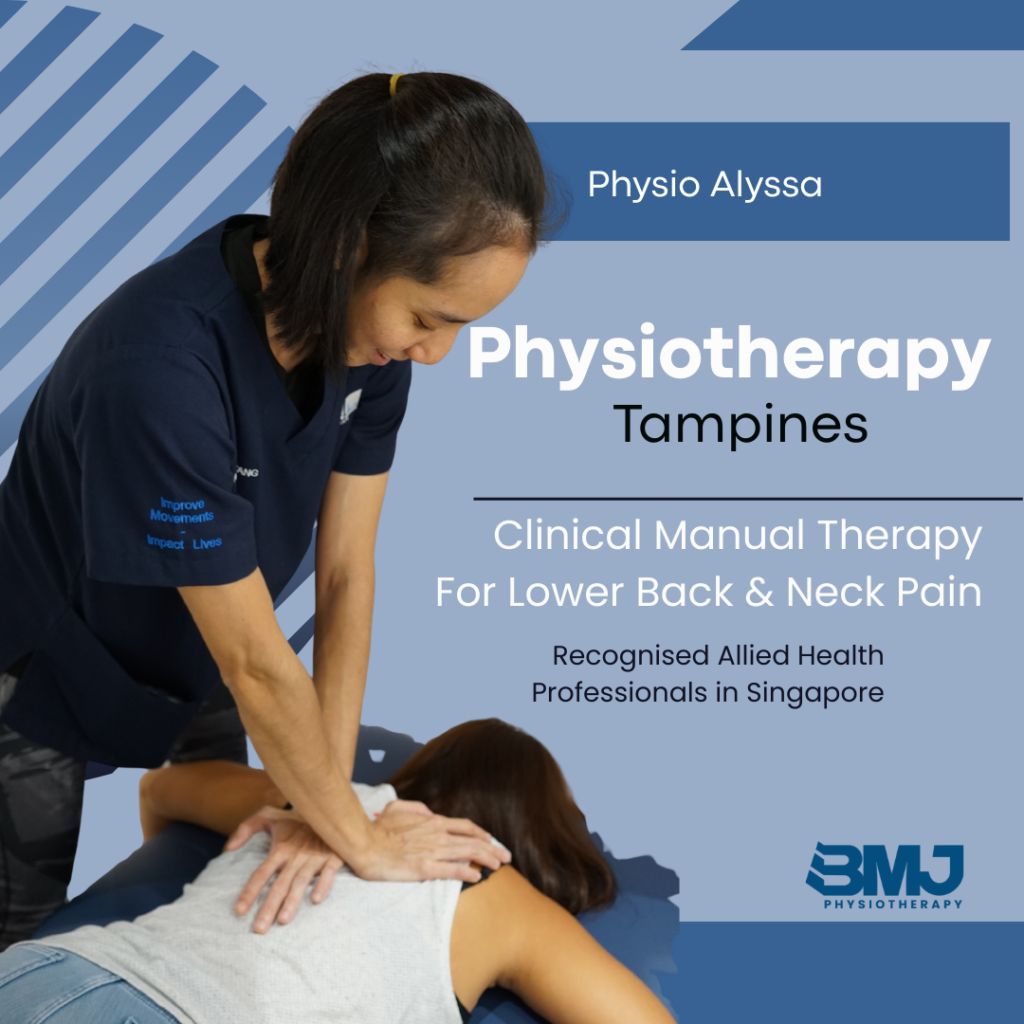
At BMJ Physiotherapy @ Tampines, manual therapy sits at the centre of modern physiotherapy care. It is not a spa treatment. It is not general muscle kneading. It is a clinical, assessment-guided approach designed to restore movement, reduce pain, and prepare your body for long-term strength and resilience.
This article explains how Physiotherapy Tampines uses manual therapy properly — and why it should often be your first choice before massage, TCM, or chiropractic care.
What Manual Therapy Means in Physiotherapy Tampines
Manual therapy refers to specialised, hands-on techniques performed by trained physiotherapists to treat joints, muscles, fascia, and nerves.
In Physiotherapy Tampines, manual therapy may include:
- Joint mobilisations to restore normal glide and reduce stiffness
- Targeted soft tissue techniques to release restricted muscle and fascia
- Neural mobilisation (nerve glides) to reduce nerve sensitivity
- Precise segmental techniques based on clinical assessment
- Dry needling for muscular trigger points
The key difference is this: manual therapy is guided by diagnosis.
Before any treatment begins, your physiotherapist performs a structured assessment. They test range of motion, joint mechanics, muscle activation, nerve sensitivity, and functional movement patterns. Manual therapy is then applied with purpose — not guesswork.
Why Physiotherapy Should Be Your First Line for Pain Management
In Singapore, many people first try massage, TCM, or chiropractic adjustments. These may provide temporary relief. But when pain keeps returning, it often means the root cause was not addressed.
Physiotherapy is recognised by orthopaedic surgeons and regulated as an Allied Health profession. Treatment plans are structured, measurable, and integrated with rehabilitation.
This matters particularly for:
- Lower back pain treatment
- Persistent neck stiffness
- Slipped disc recovery therapy
- Osteoarthritis knee treatment
- Sports injury physiotherapy
- Post-surgery rehabilitation
Unlike passive treatments alone, Physiotherapy combines:
- Manual therapy for immediate change
- Pain management strategies
- Targeted strengthening
- Load progression
- Long-term prevention planning
This layered approach is why physiotherapy is commonly the preferred pathway after medical diagnosis.
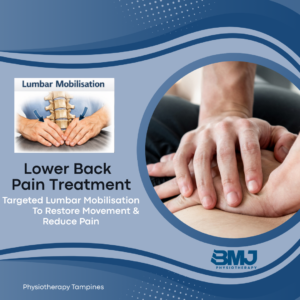
Lower Back Pain Treatment: A Core Focus
Lower back pain is one of the most common reasons people seek Physiotherapy Tampines services.
Some experience sharp pain when bending. Others feel “stuck” when standing up. Many describe stiffness that worsens after prolonged sitting.
Manual therapy plays a strong role here.
How manual therapy helps lower back pain:
- Restores joint movement between lumbar segments
- Reduces protective muscle guarding
- Improves flexion and extension range
- Decreases local nerve sensitivity
But manual therapy alone is not the solution.
At BMJ Physiotherapy @ Tampines, once mobility improves, the next phase begins:
- Core stability work
- Hip hinge retraining
- Anti-rotation strengthening
- Progressive loading exercises
This is where lasting change happens.
Massage may ease muscle tightness. But if the spine mechanics and movement patterns are not corrected, symptoms often return.
The Role of Dry Needling
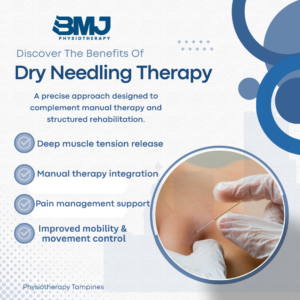
Dry needling is often misunderstood.
It is not acupuncture in the traditional TCM sense. It is a clinical technique used to release trigger points within muscles that are contributing to pain or movement restriction.
In Physiotherapy Tampines, dry needling may be used for:
- Chronic lower back tightness
- Neck sprain recovery
- Shoulder stiffness
- Calf tightness affecting gait
- Sports injury physiotherapy cases
The goal is simple: reduce muscular tension so the patient can move properly.
Dry needling is typically followed by corrective exercises. This pairing ensures the muscle does not revert to its dysfunctional state.
Manual Therapy vs Massage vs TCM vs Chiropractic
It is important to clarify the differences.
Massage
Massage focuses on general muscle relaxation and circulation. It is helpful for recovery and temporary tension relief. It does not involve joint-specific assessment or structured rehabilitation planning.
TCM
TCM approaches pain through traditional frameworks such as qi flow and meridians. While some patients find relief, it does not typically involve biomechanical assessment or structured load progression.
Chiropractic
Chiropractic adjustments focus primarily on spinal manipulation. In some cases, this may provide short-term relief. However, comprehensive rehabilitation and strengthening are not always central components.
Physiotherapy
Physiotherapy integrates:
- Clinical assessment
- Manual therapy
- Pain management
- Strength progression
- Functional retraining
- Return-to-activity planning
It is recognised by orthopaedic surgeons and insurance providers in Singapore. That professional recognition reflects structured training and evidence-based standards.
For persistent mechanical pain, physiotherapy should often be considered first.
How Manual Therapy Is Combined with Prescribed Exercise in Physiotherapy Tampines
Manual therapy creates opportunity. Exercise creates durability.
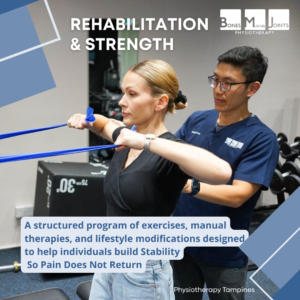
After joint mobilisation improves neck rotation, patients may perform:
- Deep neck flexor activation
- Postural endurance drills
After lumbar techniques improve movement:
- Controlled hip hinge patterns
- Core bracing drills
- Gradual load introduction
After ankle mobilisation:
- Calf strengthening
- Balance retraining
- Gait correction
This integration is what separates Physiotherapy Tampines from other isolated, hands-on treatment.
When Manual Therapy Is Not Enough
Manual therapy is powerful. But it is not suitable for all pain.
Pain driven primarily by:
- Inflammation
- Systemic conditions
- Severe instability
- Structural fracture
Requires different medical management.
This is why assessment comes first.
At BMJ Physiotherapy,red flags are screened carefully. If a case requires medical referral, appropriate guidance is provided.
What to Expect at BMJ Physiotherapy @ Tampines
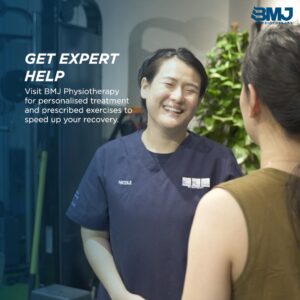
Your first visit includes:
- Detailed history
- Range and strength assessment
- Movement testing
- Functional task analysis
If manual therapy is indicated, it is applied in short, targeted sets. The therapist reassesses immediately to confirm change.
Sessions may include:
- Manual therapy
- Dry needling
- Pain management techniques
- Physiotherapy consultation and treatment
- Structured exercise progression
Insurance claim documentation can be provided where applicable.
Why Tampines Residents Choose Physiotherapy First
Residents in the East often balance busy work schedules with active lifestyles. Recurring pain interferes with productivity and quality of life.
Choosing BMJ Physiotherapy@ Tampines provides:
- Structured care
- Evidence-based treatment
- Professional recognition
- Insurance claimability
- Long-term recovery planning
Rather than temporary relief, the goal is restoration of function.
Frequently Asked Questions
Is manual therapy painful?
It should not be sharply painful. You may feel pressure or a therapeutic stretch. Communication is constant throughout treatment.
Is physiotherapy better than massage for lower back pain?
For mechanical lower back pain with movement restriction, physiotherapy is typically more appropriate because it addresses joint mechanics and muscle control, not just muscle tightness.
How many sessions are needed?
Acute cases may improve within a few sessions. Chronic conditions require structured progression over several weeks.
Is dry needling safe?
When performed by trained physiotherapists, dry needling is safe. Mild soreness may occur for 24–48 hours.
Can I claim physiotherapy from insurance?
Many insurance plans in Singapore allow physiotherapy claims, especially when referred by a doctor. Check your individual policy.
Should I try TCM or chiropractic first?
If your pain is mechanical and affecting movement, physiotherapy is often the most structured first step because it integrates assessment, manual therapy, and rehabilitation.
Do I still need exercise if manual therapy works?
Yes. Manual therapy provides short-term improvement. Exercise ensures the improvement lasts.
Final Thoughts
Manual therapy is not about cracking joints or temporary relaxation. It is about restoring movement so your body can function properly again.
In Physiotherapy Tampines, manual therapy, pain management, lower back pain treatment, and dry needling work together inside a structured rehabilitation plan.
If you are unsure whether your condition requires physiotherapy, massage, or another
