
Ankle Pain, Elbow Pain, Foot Pain, News, Physiotherapy, Shoulder Pain, Sports injury
Kinesiology Taping vs Athletic Taping : what’s the real difference and when to use each
Dec
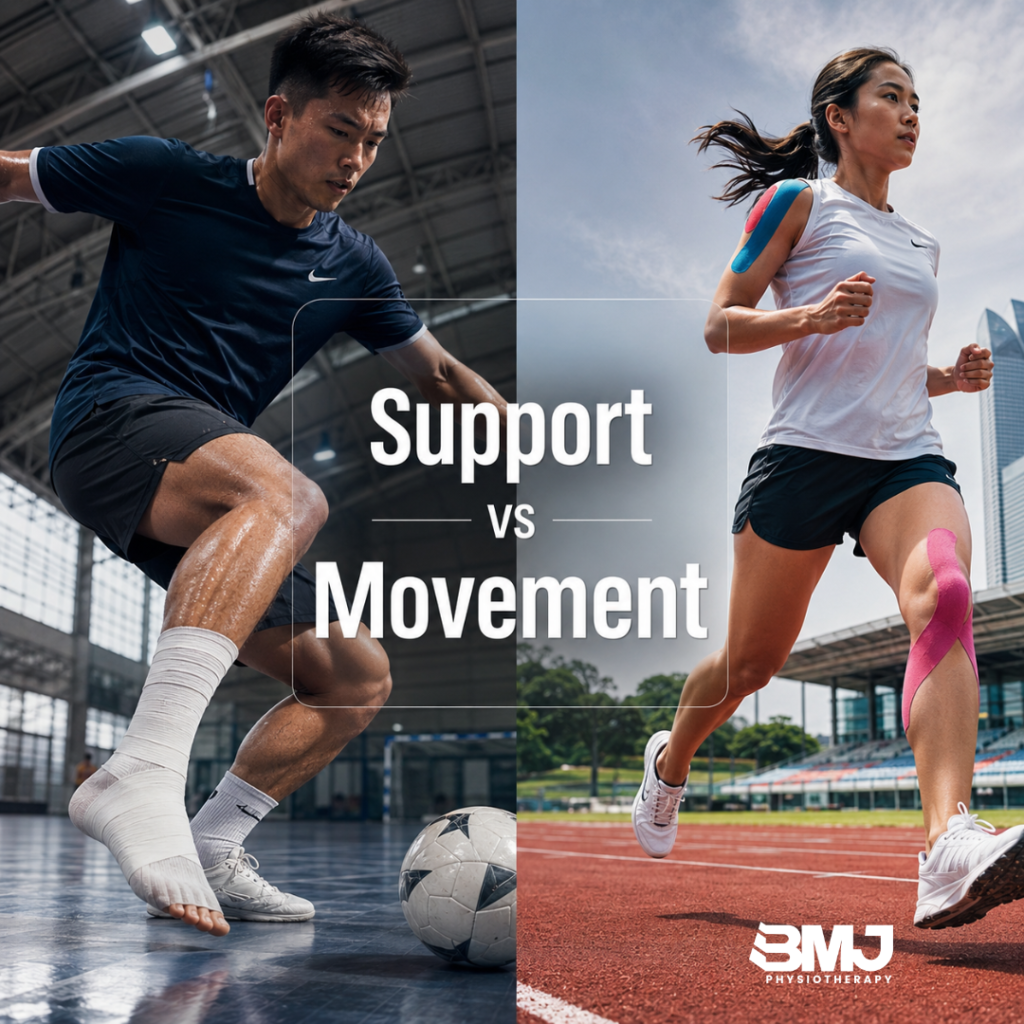
If you have watched a weekend badminton game at a community sports hall or a weekend football match, you have likely seen two very different tapes in action. One looks like coloured stretchy strips on shoulders and knees. The other is white, rigid, and layered like a brace. Both promise support, yet they work in different ways and suit different situations.
Quick definitions and Kinesiology Taping & Athletic Taping work
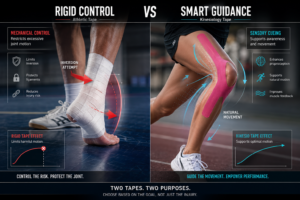
- Athletic tape, also called rigid tape: non-stretch cotton or zinc-oxide tape. Its main job is mechanical. It limits joint range to protect healing ligaments or reduce painful movements. Think ankle sprain support during a futsal game or to block end-range wrist extension.
- Kinesiology tape (often called KT tape): Elastic, skin-like tape that stretches and recoils. Its main job is sensory. It boosts proprioceptive feedback, which is your body’s position sense, and gently lifts the skin to reduce sensitivity and improve tolerance to movement. It does not lock a joint like a brace. It cues better movement patterns without heavy restriction.
Both can reduce pain and improve function when used correctly, but they are not the same tool.
Support vs proprioception: choosing the right tool
If you need hard limits on motion, choose rigid tape. Early after an ankle sprain, rigid strips in a stirrup and figure-6 can reduce inversion and protect healing tissue during a return-to-running transition.
If you need awareness and comfort to move better, choose kinesiology tape. For example, a runner with patellofemoral pain may use an elastic Y-strip on the quadriceps to cue softer knee bend and hip control. A desk worker with shoulder blade pain can use elastic tape across the upper back to remind the shoulder blades to settle down and back, paired with posture breaks.
If you are unsure, a short assessment helps you match tape to your goal. Our team often pairs taping with coaching on technique and load management. For runners, a focused review or formal gait analysis can be useful to correct the cause, not just cover symptoms. You can learn more about how we assess running mechanics in our overview of running gait analysis.
Pros and cons at a glance
Athletic taping
- Pros: Strong support; limits painful ranges; helpful early in ligament injuries.
- Cons: Can feel stiff; usually short wear time; higher risk of skin irritation if applied too tight.
Kinesiology taping
- Pros: Comfortable; allows movement; water resistant; can stay on longer; helpful for posture cues and gradual return to activity.
- Cons: Less mechanical control; benefit depends on proper application and good rehab habits
Wear time and tightness
- How tight should athletic tape be? Firm but not constricting. You should not feel throbbing, tingling or numbness. To test, press a fingernail into skin beyond the tape; colour should return in 2 seconds after you release. If not, loosen or reapply.
- How long can you wear it? Rigid tape is usually for short bouts, such as a match or training session, then removed. Elastic kinesiology tape can stay on 2 to 5 days if the skin tolerates it. Pat dry after showers; avoid heat and aggressive rubbing.
- Should you sleep with athletic tape on? Generally avoid sleeping in rigid tape unless your clinician has advised it for a specific reason. Elastic tape is often fine overnight if skin is comfortable and circulation is normal.
When not to tape
Do not tape over infected, blistered, sunburnt, or broken skin; fresh wounds; areas of deep-vein thrombosis concerns; or known tape allergies or if you have significant swelling that changes quickly. Stop if you feel burning, a rash, itching, or numbness. If symptoms persist or worsen, book a physiotherapy assessment rather than DIY.
Common myths, busted
- Do the colours of KT tape mean anything? No. Colours do not change the effect. Choose based on preference or visibility.
- Is athletic tape a placebo? Taping is not magic, and context matters. Research suggests Kinesiology Taping and athletic taping can reduce pain short term and improve confidence in movement. The effect is part mechanical and part sensory. It works best as a bridge to active rehab, not as a stand-alone cure.
- Does Kinesiology taping really help with knee pain? It can, particularly for patellofemoral or overuse pain, by improving comfort and movement awareness. It does not replace strength work for hips and quads, and it should not delay a proper assessment for persistent pain. If you struggle with a running knee pattern, pair short-term taping with targeted strengthening and technique changes. Our page on managing anterior knee pain outlines how we approach this.
Practical guidance for different users
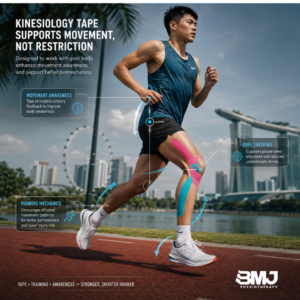
Runners: For a mild ankle roll or shin hotspot, rigid tape can protect during a careful return to easy runs on flat routes or treadmills. For patellofemoral pain, elastic tape can cue better tracking while you build hip and calf strength. In humid Singapore weather, clean and dry the skin well and shave excess hair for better adhesion. Avoid taping over sweaty skin just before a long run.
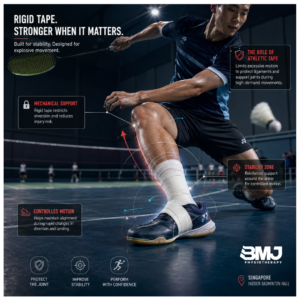
Ball sports Use rigid tape to limit end-range movements at the ankle or thumb during matches, especially on changing direction. Combine with balance drills and sport-specific change-of-direction training between games. If stiffness is your main barrier after a knock, elastic tape may be enough to encourage freer movement without locking the joint.
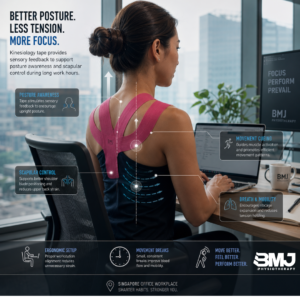
Desk workers with shoulder blade pain Elastic tape across the upper back can remind you to sit tall and avoid shrugging. Pair it with micro-breaks every 45 to 60 minutes; stand, roll your shoulders, reset your screen height to eye level, and do 5 deep breaths. If pain persists or you have arm tingling, see a physiotherapist for assessment and a simple physiotherapy exercise plan.
Safety and skin tips
- Do a patch test on the forearm for 20 to 30 minutes the first time you use a new tape.
- Round tape corners to reduce peeling.
- Apply with minimal stretch on the ends to protect skin.
- Remove slowly in the direction of hair growth. Use baby oil or warm soapy water to ease removal.
- If you notice rash or blistering, stop and allow skin to settle before trying again.
Where tape fits at BMJ Physiotherapy
Taping is a short-term aid. We use it to reduce pain, improve confidence, and buy you space to move well. Then we build capacity with progressive loading, targeted strengthening, and movement retraining. That might include hands-on care, coaching, and a plan you can follow between sessions. If you need help with persistent knee issues related to running, our anterior knee approach explains how we combine education, strength, and technique changes. If you are unsure whether taping or hands-on care would help right now, read more about our sports taping service.
FAQ
- What is the difference between athletic tape and kinesiology tape? Athletic tape is rigid and restricts movement for protection. Kinesiology tape is elastic and aims to improve body awareness and comfort while allowing motion.
- Does athletic tape really work? Often yes, for short-term support and to limit painful ranges. It works best when combined with rehab.
- How tight should athlete tape be? Snug, not painful. No pins and needles, throbbing, or colour change. If in doubt, loosen it.
- Should you sleep with athletic tape on? Usually no for rigid tape. Elastic tape is commonly fine if the skin is comfortable.
- What do the colours of KT tape mean? Nothing clinical. Colour does not change strength or effect.
- Does KT tape really help with knee pain? It can reduce discomfort and cue better movement, especially for patellofemoral pain, but it should sit alongside strengthening and technique work.
- When should you not use sports tape? Avoid on broken or irritated skin, with known allergies, or if swelling changes rapidly. Stop if you get a rash, itching, or numbness.
- Is athletic tape a placebo? Evidence shows short-term benefits that are not purely placebo. The effect depends on correct use and a good rehab plan.
When to see a physiotherapist instead of DIYing
- Pain lasts more than a week despite rest and simple care.
- You have recurrent sprains or your joint feels unstable.
- Night pain, locking, giving way, or tingling into the arm or leg.
- You are unsure how to apply tape safely.
A short assessment can save time and frustration. We can show you safe taping options, correct technique and the right progressions to keep you moving. If your knee pain flares when you run, start with a conversation about your training load and technique, then layer in strengthening and, if needed, taping for short-term relief.
Summary and next step
Athletic tape and kinesiology tape both have a place, but they solve different problems. Rigid tape protects by limiting motion. Elastic tape guides by improving awareness and comfort. Use them briefly, respect your skin, and pair them with movement retraining and strengthening for lasting change. If you want help choosing and applying tape, or you need a clear plan to fix the cause, book a session with our team. We will assess, coach, and help you return to the activities you enjoy.
Internal links used:
- Learn how we assess running mechanics in our overview of running gait analysis: https://bmjtherapy.com/benefits-running-gait-analysis-rga/
- Managing anterior knee pain related to running: https://bmjtherapy.com/knee-physiotherapy/anterior-knee-pain/
- Read more about our sports taping service: https://bmjtherapy.com/treatments/sports-taping/
